

Why British and American English Have Different Names for the Same Foods
- schlesadv
- Jul 30
- 2 min read
Aubergine / Eggplant
The scientifically named Solanum melongena comes from the Indian subcontinent and first appeared in England by the end of the 16th century. The British (and Germans) borrowed the French word aubergine (which actually traces back to the Sanskrit vatinganah) to name the plant. The American word for it, “eggplant,” originated in English in the mid-18th century and is derived from the white and yellow versions of the vegetable, which apparently resemble goose eggs.
Arugula / Rocket
Both of these words come from the same place, and while they appear quite different, “arugula” and “rocket” follow the same linguistic path. Both names for the plant species Eruca sativa share the common Latin root eruca, meaning “a cabbage-like plant.” The native Mediterranean plant was originally called ruchetta by the ancient Romans, eventually becoming rucola in Italian. By the 16th century, fellow Romance language speakers in France called it roquette. When the leafy green made it to England, the British replaced the French-sounding “qu” with the more Anglican-sounding “ck” in “rocket.” Meanwhile, Italian immigrants brought what they called rucola to the United States, where it evolved in American English to “arugula.”
Coriander / Cilantro
Coriander is the plant that produces the zesty green herb we know in North America as “cilantro,” but most Europeans call “coriander.” In the U.S., “cilantro” refers to the leafy part of the plant used as an herb or garnish, while “coriander” refers to the seeds that are ground into a cooking spice. In Europe, “coriander” refers to the leaves, seeds, and stem of the same plant. Interestingly, the linguistic root of “coriander” is the Greek koriannon, which botanists say is related to koris(“bedbug”), for the bad smell of unripe fruit. Folks who have the gene that makes cilantro taste like soap can identify with this particular naming convention.
Courgette / Zucchini
Much like the “aubergine”/”eggplant” and “arugula”/”rocket” dichotomies, the split between “courgette” and “zucchini” has a lot to do with geographical location and emigration. Both words refer to a type of green squash from the Cucurbita pepo family. The vegetable, native to Central and South America, was cultivated for thousands of years before it was adopted into European cuisine as a result of colonization. The French called it courgette, and the Italians called it zucchini. “Courgette” made it to British English by way of geographic proximity, while “zucchini” came into American English with the wave of Italian immigration to the United States from about 1880 to 1920.
Biscuit / Cookie
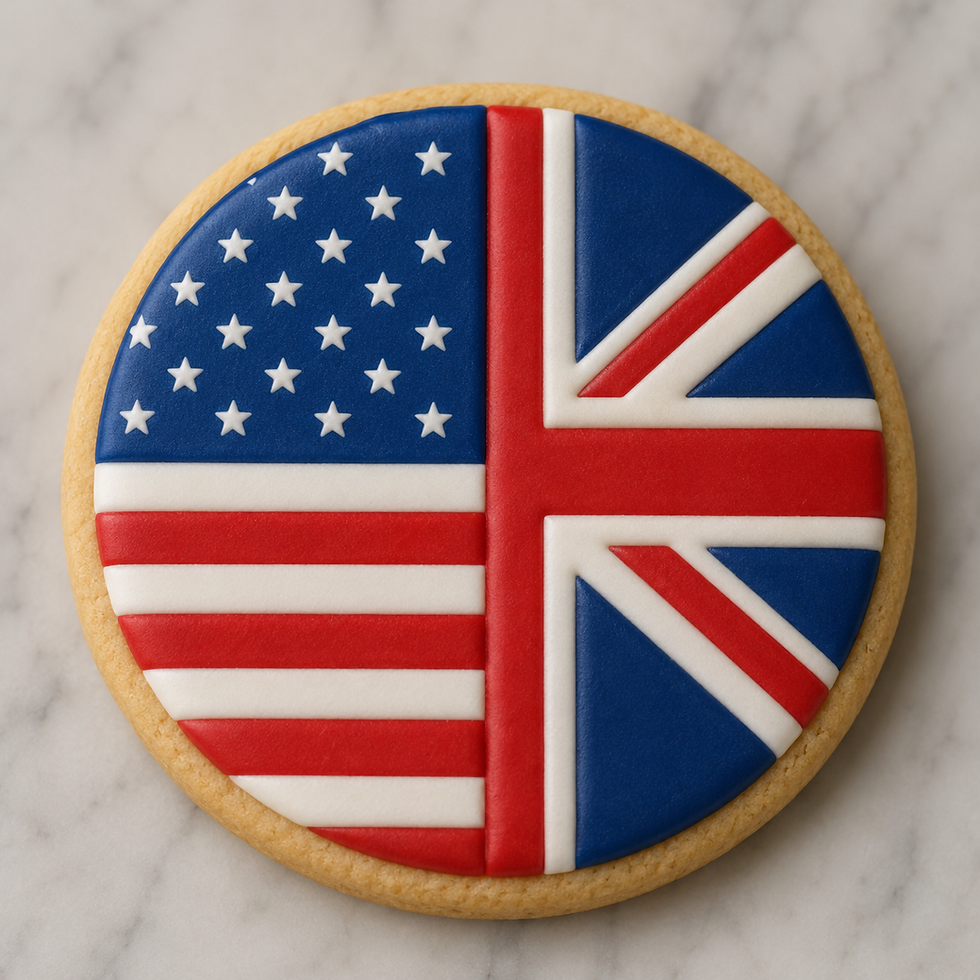
In the U.S., a biscuit is a flaky, buttery pastry often served for breakfast. In England, a biscuit is what Americans call a “cookie” — a sweet, baked dessert ranging in texture and density. When Dutch settlers arrived in New Amsterdam (now New York City), they brought with them koekjes, what we now call “cookies.” The root is koek, the Dutch word for “cake,” with the suffix -je added to designate “little cakes.” Meanwhile, the British get “biscuit” from the French bescuit, meaning “twice cooked.” The Italian word biscotti also comes from the same Latin root.



Comments